Showing posts with label CFI training. Show all posts

Friday, May 5, 2017

Evolution of a Pilot

Yesterday my CFII and I were flying together again. The first time in a very long time. We've been working on preparing me for the CFI-Instrument rating for the last few months. After covering all of the Instrument ACS and the CFI-I PTS it was time to get flying again. To see if I can teach at the same time as I fly instrument.

After the first approach he said, "The good news is, it can only get better from here!" Yeah, it was a cluster f*ck. I put that behind me, flew and "taught" the missed and holding procedure. Then flew the same approach a second time and did better both teaching and flying.

It was our first time up with me teaching instrument and it was an eye opening experience to say the least. To really teach instrument flying you have to be waaaayyyy ahead of the airplane, the controllers and the student. I'm at the point where I'm ahead of the plane and the controllers 99% of the time when I fly instrument. However, adding teaching to the process adds a whole new level of difficulty. It means I have to know what's going to happen, what has to happen, how to make it happen, diagnose why it doesn't happen when the student screws it up ... and ... be able articulate all of that at the same time in complete sentences a human can understand. Hey, if I can learn enough to be a decent CFI, I will be able to do this. Just takes practice.

But that's not why I'm posting about this... yesterday's flight brought to mind my own evolution as a pilot. Yesterday highlighted to me some other areas of progress that I hadn't considered recently.

  • Take off and climb out. On take off both he and I noticed the poor climb performance of the plane given the Vy airspeed. We both immediately figured the air speed indicator was off and when I adjusted the pitch for what looked like the proper Vy pitch. I got the right climb rate. I never thought I'd be able to do that when I started training... and now I tell my students that they need to do that!
  • Over the mountains - we flew directly out over the hills and were in some turbulence. Turbulence that, when I started flying, would have had me very nervous. I barely noticed it aside from how it made it difficult to hold altitude. 
  • I was muttering at myself whenever I didn't hold a heading or airspeed the way I was planning on it  - my standards for myself are going up significantly in what I consider good flying. At the same time I didn't let it bother me. 
  • His comment about how it can only get better didn't bother me either. Years ago that sort of comment would have been immediate dark cloud over my head for at least a couple days. This time I just agreed and resolved to make it better quickly, which I actually did. 
On the return to RHV I was thinking of a flight we he and I did a couple years ago. When we went out to the valley for some instrument work and came back in just before they shut down the airport. It was an incredible entrance. Then he said how he was reminded of that same flight. Knowing what I know now about how flights (and students) tend to merge together in the CFI brain I was surprised but pleased that he remembered that entrance too.

Yesterday was a nice way to start the a new phase of my own evolution as an instructor pilot.


Sunday, December 20, 2015

The Planets Align and a CFI is Born

We Have a Date

Tuesday, December 1 - I drive to work extra early to avoid traffic. I'm sitting at my desk working and my cell phone rings - "No Caller ID" it says. Normally I don't answer "No Caller ID" calls, but this time I did. The caller asked for me by name and identified himself as the Aviation Safety Inspector for the San Jose FSDO. He was calling to schedule my CFI check ride!

Private & Commercial Lesson Plans
I was thrilled to hear from him and I think he could tell. We agreed to schedule the ride for Wednesday, December 9 at 7:30 AM at the flying club. He picked the date. I was willing to move any meeting I had to in order to do this ride but I had no meetings scheduled that day. We had a very pleasant chat as he told me what to expect and asked if I was endorsed and ready to go. He started to explain how it's OK for people to download lesson plans from the internet but if I did that he'd make me write one out in front of him. I told him not to worry, I had lesson plans I'd written from scratch. He seemed pleasantly surprised about that.

I texted my CFI, Scott, with the exciting news. Then I told my husband, Jeff, what was coming. I made him swear not to tell anyone else. I'd had the unfortunate experience of going up for a check ride with the whole world knowing and failing the ride. I didn't want to have that happen again when I was going up for the most difficult check ride of all. Lastly I checked the forecast for the my check ride date. The weather looked clear for most of the mid week.

Preparing for the Ride

I had a week to do any final preparation for my CFI check ride. Looking back I think I spent it exactly the right way. I had already planned to fly on the 1st so I did that. I practiced performance maneuvers, soft field take offs and landings, emergency descents and emergency approach to landing. Later that evening I flew again to get night current. Three trips around the pattern with a full stop landing for each. That was all the flying I did.

My work remained extremely busy. So I didn't have much spare time to worry about my ride during the week. The weekend before the ride I volunteered as Race Control for the 25 Hours of Thunderhill. As a result I got to spend time with my racing family and I had something to do aside from pace and worry all weekend. During my downtime at the race I reviewed my lesson plans and studied the finer details of how magnetos work.

I met with Scott twice... once on the 1st to just calm down my spinning brain and discuss what we'd have to do next (complete the IACRA form online and some final paperwork). The second time was because, as usual, I came up with a couple more questions. The second day we met was the morning of the 7th. I had a small window I could step away from the office and he had a small window in the middle of his corporate flying day. The weather was not cooperating but Scott was his usual professional self and flew the instrument approach back into RHV to meet up with me. I think we talked for about an hour and that was it. The weather forecast for the rest of the week did not bode well. Low ceilings were forecast for the entire week.

Monday night I gathered everything I needed for my check ride. My private and commercial syllabi and lesson plans and all of the materials I needed for all of my private and commercial lessons (I didn't know which ones I'd be asked to teach). My reference materials: the 2016 FAR/AIM, Airplane Flying Handbook, Pilots Handbook of Aeronautical Knowledge, Aviation Instructors Handbook, sample POH for both C172 and Piper Arrow II. My iPad with useful videos and even more reference material. My pilot certificates, medical and knowledge test results. Both of my log books (so I could prove I was properly endorsed). In the end I had three bags of books plus my laptop bag and my flight bag. I looked at the mass of materials and reflected on the time I'd spent with them all to get where I was. Somehow the mass seemed appropriate.

I was ready. I didn't need to do extra preparation that week between scheduling and the actual date. I had spent the previous year and a half preparing for this ride. There was no last minute thing I could do. So I didn't. Tuesday, the 8th, I left work early and reviewed my notes one more time. Then I went out to dinner with my husband and relaxed for the rest of the evening. I checked the forecast before going to bed and it was getting worse. The ceilings were going to be below 2000' most of the day it seemed. That was one thing I couldn't control so I didn't worry about it. I figured at the very least I could get the oral portion out of the way.

The Big Day

I got up at 5 AM and checked the TAF nearest to my airport. The forecast hadn't improved. It looked like I would be doing the oral only. I was disappointed but I looked forward to getting that out of the way. I knew the oral portion of the CFI ride could be 4 hours or more and that, in itself, would be a long day. When I left the house at 6 AM I told my husband my intent was to pass the oral today at the very least. He wished me a sleepy good luck.

I drove the mountain roads towards the valley and airport. My route takes me past a view of the Monterey Bay. When I reached the highest point of my drive I looked out towards the bay in the pre-dawn light. I thought I saw stars above the bay. I tried not to get my hopes up. It was very normal for clouds to hover low over the Silicon Valley when it would be clear above. I mentally rehearsed my "we won't be flying today but let's do the oral anyway" speech for the ASI. It wouldn't be the first time I'd have to split a check ride that way.

I proceeded down the mountains and could see the valley lights. That surprised me... I could see the lights, and as the pre-dawn light increased in the sky I could see the outlines of high cirrus clouds but nothing low. It was still quite early though and it was common for clouds and fog to engulf the valley later in the morning.

I stopped at a nearby Starbucks for coffee and something to eat for breakfast. It wouldn't be good for me to attempt this on an empty stomach. As I pulled into the parking lot I realized I forgot the Private Pilot textbook I intended to use with my syllabus. It was an hour drive back home so that wouldn't work. I texted my CFI who lived about 10 minutes away and asked him if he could bring his. He could. Crisis averted.

I had 45 minutes before the ASI would arrive and I needed to get the aircraft log books and prepare them for review. I was told to expect the ASI to bring the maintenance safety inspector with him to inspect the aircraft so I was ready for a major focus in this area. The club's owner (and A&P AI), Mike, let me in to the office to get the log books and reviewed them with me briefly.

It was 7AM and the inspector, Jeff, walks in the door alone. No maintenance inspector in tow. 30 minutes early. I shook his hand and told him I was getting ready and asked him to make himself comfortable as he chatted with Mike. I continued to prepare the log books and lay out my materials. It was about this time I realized I left my CFI PTS at home with all of my notes in it. I had a copy of the PTS on my laptop but that would hurt. Oh well, if that was the worse that happened I'd be thrilled.

About 7:15 Scott walks in the door with the Private Pilot text in his hand. He was surprised to see the ASI and told him that he arrived early deliberately to get here before the safety inspector did, but it didn't work out that way. They knew each other rather well so they started talking and I told them both I'd use the next 10 minutes to eat my breakfast.

Proving Eligibility

It was 7:30 and time to start. Scott and Jeff (the ASI) and I closed the door to the office and we began. The first thing we had to do before the ride could officially start was verify my eligibility. First, a little background about my situation... My CFI, Scott, is also a Designated Pilot Examiner (DPE) performing check rides in this FSDO for the last year. He's also been instructing and flying full time for the last 14 years. As an understatement, Scott knows his stuff. The ASI, Jeff, knew it. I knew it too. And between Scott's expertise and my "detail oriented approach" I was fully confident I had everything required. The best way I could describe this portion of the experience was a dance. We all knew the moves we had to make and the next move that would happen.

The ASI took my log books and asked me to prove I was eligible, which I did. Then he started flipping back through my log books to look at my Commercial, Instrument and Private training and endorsements. Normally this is an area where the ASI or DPE can identify problems with previously issued endorsements - not to invalidate the candidate but as a scenario to test the candidate's application of the rules around endorsements. What happened next was funny.

"Scott did your Commercial?" "Yessir" "Don't call me sir, that's my dad." 
"He did your Instrument?" "Yes" I see the beginning of a grin on Scott's face.
"And your Private?" "Yes" Scott's grin gets bigger.
"That's no fun then!" Jeff said with a sigh and a laugh and he hands my log books back to me. Scott and I laughed.

Jeff knew my endorsements would be correct because he knew the caliber of the CFI that did them. I hope to someday be just as frustrating for anyone trying to find errors in endorsements in the future!

Next was IACRA and ensuring what was in the computerized system matched (roughly) what was in my logbook. The numbers in IACRA didn't look right to Jeff and he questioned how/why I had so many more hours in IACRA than the "amount forwarded" total in my log book. I opened my laptop and pulled up a quick calculation of the hours which proved the correctness in IACRA. Scott pointed out I was using an application he wrote, on a Mac, for this.

Soon the verification was over, IACRA was electronically signed and the ride began. Scott shook my hand and patted my shoulder as he left the room. It was up to me now.

Normally I go into great detail about the my check rides in my blog. This time I won't. For one thing the ride was close to 8 hours long and I'm sure people are getting tired of reading at this point. For another I wrote up 5 pages of notes about the ride for Scott's benefit and the benefit of anyone else going to take a CFI Initial Check Ride. The notes are posted here. Feel free to review if you'd like to see what a CFI candidate has to do on a CFI Check Ride. In the mean time I'll share more the internal experience of what it was like. 

Oral

Going into the oral I was confident I would do well. As Scott told me once, he knew I know my stuff and he'd never seen knowledge fall out of my head. My confidence went down rather quickly though. I was asked about the CFI privileges and limitations and I knew what they were but I couldn't recall which regulation, specifically, set those privileges and limitations. Part 61 of the FARs was not good enough. Jeff pressed me for the specific regulation and, at the same time, offered up more questions that confused me further as I tried to look it up. I was flustered but I finally found the regulation and proved myself correct.

I let that go and continued to answer questions. The next set of questions were all about learning and teaching theory. This is where my PTS with notes would have been very helpful but I didn't have it. I knew the concepts and a couple of the key terms for each topic but I didn't have them all memorized. The good thing was, the ones I did have memorized where the most important and most relevant to aviation training so we were able to move past them. Maybe my very high score on the FOI written test helped with this. I felt I did very well when talking about the CFI's responsibility in the training process. Endorsements (again) and limitations, how to teach and why.

We moved on to technical subject areas, aerodynamics and the like. Sometimes I struggled with the intent of the questions and the way the ASI jumped around in his questioning but I kept going and did well. I felt particularly strong on stalls and spins, which he touched on many different ways during the questioning. It took me forever to recall what makes an aircraft turn - it's the horizontal component of lift. I'll never forget that again!

Then we talked about systems. Explain the fuel system. That stopped me cold. I knew the fuel system, I had a lesson with fuel systems embedded in it but I wasn't ready for that answer. I started to explain the fuel system but I went into too much detail and was very awkward. That wasn't going well. So we paused for a break. I came back and said I'd try to explain it like I'd explain it to my daughter. He was pleased when I said that... so I tried again and it was better. Then explain the electrical system and a couple more. I was definitely weak there compared to everything else but not so weak that I had to stop.

Topics switched again for National Airspace and VFR weather minimums. That I could teach! It was something I'd taught many times before for student (and even commercial pilot) candidates I've worked with to prepare for their check rides. As I went through the lesson Jeff said I was the only person he tested that didn't have a problem on one of the loopholes for class G night VFR weather minimums. I felt better after that one.

We covered many, many more areas between 8AM and 11:45 when we broke for lunch. Finally I knew I had passed the oral portion of the check ride. Jeff and I looked out the window and the skies were, by some miracle, clear. He said we didn't have to complete the ride today if I didn't want to. It was a long day after all. I told him I'd check the weather and let him know after lunch. Then we agreed to meet at 12:30 to start back up.

Lunch

I was definitely feeling the early start and the previous four hours of questioning and teaching. I put away some of my materials and the aircraft's log books. Then I wandered around the club a bit in a daze. Finally I took my iPad with me to Jamba Juice to get something to eat. I couldn't imagine eating anything more solid than a fruit smoothy at that point. The skies were clear and the wind was calm as I drove to get my food. I looked at the skies in disbelief, watching for signs that the air would be turbulent above. Part of me wanted to have a good reason to delay the flight. I was tired. Maybe I needed more practice.

At the restaurant I checked the weather - sure there would be an AIRMET for turbulence if nothing else. No AIRMETs, no PIREPS indicating the weather would make the flight difficult. The Santa Clara Valley was clear and calm and ready for my flight. This was probably the best weather I'd get all month and I knew I didn't actually need more practice flying. I decided to go for it and texted Scott to let him know. His response was, "The planets are aligned. Go for it!" I didn't know that Scott and Jeff had already talked and Scott assured him I was going to fly.

I headed back to the club to make sure the extra fuel I requested for the aircraft was onboard. Jeff told me our flight would take 2 to 2.5 hours. The last thing I wanted was to run out of fuel on a check ride so I added to my reserve.

Preflight

We walked out to the plane to start the flight at about 12:30PM. As we walked towards the plane I started to describe how I would teach pre-flight. After a minute or two he stopped me and told me to go ahead and preflight the aircraft and he would ask me question as we went. The first things I did was hand him the airworthiness certificate and registration to inspect. I also showed him the weight and balance data. (Which, of course, led to questions about the max gross weight of the aircraft).

As I went about my preflight he observed and asked questions. I enjoyed this part. I'd spent a lot of time getting to know this plane and while I didn't recall off the top of my head the 3rd component of the structure of a wing (that would be the rib) I knew everything I needed to. After a while it seemed like a game of question and answer where I felt in my element. At one point he asked me, "Why is the sky blue?" Huh? I felt like I was in a Robin Williams routine so I quipped, "Because of the atmosphere". He actually said the answer was because the atmosphere reflected blue wavelength or something like that. At that point I laughed and told him he was worse than my CFI, Scott. Scott would never ask a question so far from left field like that. Not unless he was giving me a hard time anyway.

Once again I'm not going to go into major details about the flight portion. You can read about it here.


Flight

Before we boarded the plane I gave Jeff my standard briefing including briefing what we would do in the case of fire, failure or loss of control on take off roll, take off or climb out. Then I briefed him on the route we were likely to get on taxi.

We pulled the plane out and started up. We started to taxi with me on the controls. As I taxied I was asked about how I would teach radio com. I found I fell very easily into teaching mode in the plane. Splitting my awareness between taxiing safely, monitoring the aircraft and answering his questions and making sure my "student" didn't cause any issues.

I did have one surprise. I had not done any flying from the right seat under the hood before and I had to do it on the ride. I found it much easier to do than expected. Which was good because that was the start of the ride. I was happy that I got to do soft field take offs and landings because I had spent so much time working on that skill. I got to do a Lazy 8, another favorite maneuver and hard won skill. I even had to do a Power Off 180. The Power Off 180 was my commercial check ride nemesis but nemesis no more due to the hard work, expert instruction and learning I'd done since that first check ride failure. I was very comfortable doing the stalls and teaching them.

As always there was one maneuver that wasn't stellar - this time it was the commercial steep turn. I performed that maneuver worse than I had done in months. However, I heeded Scott's advice and taught my way through it as I kept the plane in spec (barely). I nailed the maneuver immediately after that. As I did each maneuver I didn't let anything before color what I did next.

Even better, I felt completely comfortable playing the role of CFI in this plane. I found myself naturally monitoring what my "student" was doing and correcting him when he was off. I was able to observe and critique the nuances of my "student's" performance and I always started with the positive. My main problem was figuring out when he was being a student vs an examiner but eventually I decided I'm supposed to be PIC so if I saw something wrong, even when I was being debriefed on my own check ride as he flew, I called it out and got it corrected. I didn't figure out that he was asking me to do a self critique when he asked me how I was doing. But that was OK.

Check Ride Over

As you can guess, especially if you read the detailed notes. I passed this check ride. First try. The hardest check ride there is. After the ASI announced the check ride was complete my mind kept repeating, "Holy Shit! I'm a CFI!" over and over. I was elated and relieved. Me! A CFI! who-da-thunk-it? I was stunned and totally unsurprised at the same time. I helped get access to a printer so I could get my temporary airman's certificate. Jeff, the ASI, was grinning broadly the whole time. He seemed happy for me too. When I talked with Scott on the phone later that day he said something I will treasure forever. He said something like, "You cannot see my face right now but I'm beaming with pride."

One test over a very long day and all of my work was rewarded. In a way it was redemption for my Commercial ride, especially that successful Power Off 180. In a way it was the culmination of over 750 hours of flying and 4.5 years of flying with one of the best damned CFI's around. I feel like I was training for this flight since my first pinch hitter flight in 2010 when I flew, in the right seat - scared to death but in love with the feeling of flight - with the same flight instructor that trained and endorsed me for this certificate.

Me and the ASI, Jeff, after my successful check ride.
A new CFI is born. 
If you know me at all you know my passion for aviation. If you've been reading this blog for a long time or if you know me extremely well you may have some grasp of the demons I had to face and conquer in order to get to and be successful on this particular check ride. Not only did I have to learn how to fly the aircraft from both seats to commercial standards. Not only did I have to learn how to teach and how to prepare lessons and Federal Aviation Regulations and all of the technical subject areas of knowledge it takes to take a brand new pilot to where they need to be. I had to learn how to be PIC of myself; to let go of my fears and the days and moments when I'm not perfect and turn those moments into opportunities to experiment and learn more.

I am incredibly grateful that my husband decided to get his pilots certificate back in 2008 and that he happened to train with the same CFI, Scott. I'm grateful that Scott made such an impression on him that I decided to trust this particular CFI to take me up and teach me just enough to safely crash land a plane if my husband had a heart attack. I am extremely grateful that Scott had the availability at the right time to take me on as a student, multiple times, to train me for all of these certificates and ratings and the wisdom to send me off on my own in between so I could really learn.  I was given the gift of flight and now I am certified to give that gift to others. What gift could be greater than that?

Sunday, November 29, 2015

750 Hours

My 750th hour - San Jose on a beautiful November day
There's a saying that goes something like this.
Pilots log hours flying as if no other hours matter.

I can't say that's entirely true. One year I logged 1000 miles run. I didn't count how long it took to run 1000 miles. Figuring I ran a 10 minute mile on average that year I ran for approximately 167 hours in one year. Coincidently, looking at my logbook, I've flown about 166 hours in the last 365 days, over 150 hours in 2015 so far.  Hmmm... I digress.

I flew my 750th hour yesterday. I thought it was going to be today, but it was yesterday. What did I do yesterday. Ah yes, I did the same thing I do most times I fly now-a-days. I worked on refining some maneuvers, saying fresh or better as I wait for my CFI check ride date to be set.

Yesterday I wanted to improve my emergency approach to landing. After which I was going to practice a bit of slow flight and steep turns. Happy to report that I pulled power around 4500 feet within glide range of South County and not only did a successful approach to landing, I landed it on the centerline, within commercial spec of normal landing distance and made it a soft field landing to top it off. Sweet! Then I flew over towards Lick Observatory to practice slow flight (that's where I took the photo above). Very good. Then I was going to do steep turns. I've been doing great to the right and "bouncing off the bumpers" to the left. I knew what I was doing wrong and I knew why, but I had trouble improving as much as I wanted. I was on a schedule so I didn't waste too much time on that and flew back to RHV. Unusually for me, I did not let the steep turns bother me. As I went about my day I thought about the problem and thought of a couple different ways to address it.

Today I flew again. First I flew to Half Moon Bay for lunch with my friends. Then I flew south to the practice area near South County and worked on the two ideas I had to improve my steep turns. One worked well. It took about half of the error out of my turns. My second idea took the rest of the error out of the turns. I repeated a couple times just to be sure it was repeatable. I was pleased and went back to RHV. I can't describe how good it feels to be able to correctly diagnose and resolve problems with maneuvers. It's especially hard to do for oneself.

I can't say my last year of flying has been my easiest. I've come close to quitting training many times. However, most of my problems have been "between the headsets" as my CFI likes to say. Good news is - I have learned much "between the headsets" as I've struggled and fought with myself to get past them. 750 hours ago I never would have said I'd be where I am today.

As I told a young man last year when he said he wanted to learn how to fly...

Learning to fly is the hardest, most wonderful, and most rewarding thing you will ever do.

With over 750 hours in my logbook, I'm still learning!

Saturday, November 21, 2015

The Value of Flying Less

It's odd for me to say, but there is some value to flying less it seems. At this point in my training, I'm done with training and now what I'm doing is maintaining my skills. I'm no longer meeting with my CFI on a weekly basis. My lesson plans for private and commercial are complete and ready for the FAA to look them over. The request is in to the FSDO for my check ride. No word yet on a date. So there's not much for me to do now but maintain.

I had been flying 3-4 times a week, trying to perfect my technique. Now I'm flying 1-2 times a week and, what I'm finding is, I seem to do best with about 10 - 14 days between "practice" sessions. A practice session is when I go up and go through all of the maneuvers to keep them fresh in my mind and reflexes.

Today I went up on a gorgeous fall morning and did all of the maneuvers that I may be called upon during the CFI check ride. Takeoffs, landings and go-arounds (9), fundamentals of flight (4), performance maneuvers (4), ground reference maneuvers (4), slow flight & stalls (7), and emergency operations (3). 1.7 hours, 6 takeoffs and landings and everything I did was easily within spec and quite fun.

It's a different type of flying now... not trying. Not thinking, just doing and "teaching" as I do. I ran into my CFI after the flight and told him how happy I was with my performance. He said he wasn't surprised at all. I'm glad it didn't surprise him. It actually didn't surprise me either... I found after a 10 day vacation when I came back I flew extremely well so I was hoping for a similar result with a 2 week break between practice sessions.

Tomorrow I'm going flying for brunch with some friends, I'll practice general good airmanship then. The same thing I did last weekend when I flew with my daughter to Sacramento so she could tour her future school. At the moment my plan is to touch each maneuver once a week, or once every two weeks depending on work and weather, and not stress it. I'm ready... and I think my job now is to maintain my readiness as simply and economically as possible. I need to start reviewing my lesson plans I think, so they're fresh in my mind whenever the FSDO calls!


Sunday, November 1, 2015

It's Coming Together

I've been working on soft field landings in a Piper Arrow... Arrows are notoriously difficult to do soft field landings in. Add to that soft field landings have always been a weak area for me. I've been "good enough" for check rides and such but this time I was getting stuck. While most other maneuvers have all been within spec I'd not been sure my soft field landings were soft enough.

I worked on it on my own but still wasn't happy... so turned to my CFI for help and he took us down to a grass strip to give me experience of what a real soft field is like. That was an eye opening experience and a lot of fun. We had a stiff crosswind on the grass field and I got to practice both soft field and crosswind techniques. Then I went out and worked on my own again and got a lot closer. I had a revelation about what I was doing that was keeping that last bit of perfect away from me.

This log book entry confirms..
I'm very close!!
Yesterday I shared my revelation with my CFI and we worked on correcting the behavior. Immediately the landings became very good... some of the best I'd ever done. On the ground I showed my CFI commercial and private pilot syllabus' and lesson plans. All of them hand written/typed by me. He was very positive about them and their presentation. We agreed, I'd fly on my own Sunday and Tuesday and we'd meet up again Saturday, most likely after Saturday he'll be contacting the FSDO to schedule my check ride!

Believe it or not, that's not the most exciting thing. Today I went up to practice as many maneuvers, take offs and landings as I could. I nailed all of the landings, even the soft field ones - which I did a couple times just to be sure. The best landing was the last... I was coming back to the field after doing ground reference maneuvers and I had a 7 knot left crosswind component. I wanted to do a soft field landing too.... so I set up for the landing at the soft field landing airspeed and corrected for the crosswind (upwind wing low, rudder to keep the nose straight). Over the runway I rotated, shifted my eyes to the end of the runway, fought for the centerline and didn't let it land. Right before the plane touched down I pulled back even more on the elevator. The upwind main touched down lightly scrch. I kept the back pressure increasing carefully. The right main touched down lightly scrch. I kept increasing the back pressure and then gently let the nose wheel touch - very lightly scrch. I kept the nose wheel very light in proper soft field landing form and taxied off the runway. It was beautiful!

All the hard work is starting to pay off! It sure feels good.

Thursday, October 22, 2015

Doing Better

After yesterday's flight...
some joy and relief
They're right. I can't "fix" me. I will always be, by nature, hyper critical with myself and I will sometimes judge myself too harshly. And then after judging too harshly I'll wallow in my judgements, judge myself for judging, and carry that frustration for hours or days after.

As I practice good self critique I'll do that less and less often but the potential will always be there. It's part of who I am. It's something I've been doing for 45 years and I am REALLY good at it. If they gave out certificates or "Master" titles or whatever for judging oneself harshly I'd be Master, Gold Seal, SuperDuper, Top Dog many times over. Ask anyone who knows me!

Anyway, back to the topic at hand.... I can't fix me. How do I move forward? How do I finish my flight instructor certificate when this one personality trait is having a negative and material impact on my progress? Something that my CFI said when we last talked struck a cord... he says this often.... examiners want to see IMMEDIATE CORRECTIVE ACTION when an error occurs in the check ride flight. I also remembered the revelation I had to have in order to solo. The revelation that I didn't have to be perfect, I had to recognize errors or conditions that were not as desired and fix it quickly.

With those words and thoughts floating around in my head I decided to do what worked for me in the past with one modification.

  1. When there is something wrong in my flying - identify whatever it is and fix it. I'm experienced enough now that I can relatively easily identify both errors and fixes. So I'm to do that as I fly. When something is slightly wrong, fix it quickly. If I stay on top of it "major" wrong won't happen. 
  2. Recognize and accept, in spite of my best efforts, I will have days, maneuvers, flights or whatever where I don't fix it. Where I will start judging myself and beating myself up. It's going to happen. There is no prevention for that. So yesterday I resolved I would forgive myself for when I do that. For the last time and the next time and the next time after that. I'll forgive myself as quickly as possible and move on. And when I fail to forgive myself, I'll forgive myself for that too.

The good news is, it seems to work. I forgave myself for Sunday and Monday and Tuesday. And resolved yesterday to fly, and when I make mistakes, take immediate and corrective action. Instead of focusing on being perfect, I focused on catching when the plane started to do what I didn't want it to do and correcting it quickly. I went up and did all of the air work I hadn't done recently, emergency approach to landing and practiced soft field take offs and landings.

What I found was, my flying was significantly better and not at all frustrating. I nailed the emergency approach to landing while talking and teaching as I did it. When my soft field landing wasn't exactly as I wanted I decided to try something different. I did the different thing and got different results. Then I modified what I was doing again and got even better results.

Looking through the list of flying maneuvers that could come up in the CFI ride, I've performed all of them to spec in the last month - first try - with the possible exception of soft field landings. Those are iffy. So I am a lot further along than I thought I was. :) There's a light at the end of the tunnel and I don't think it's a train.


Monday, September 28, 2015

Blood Moon

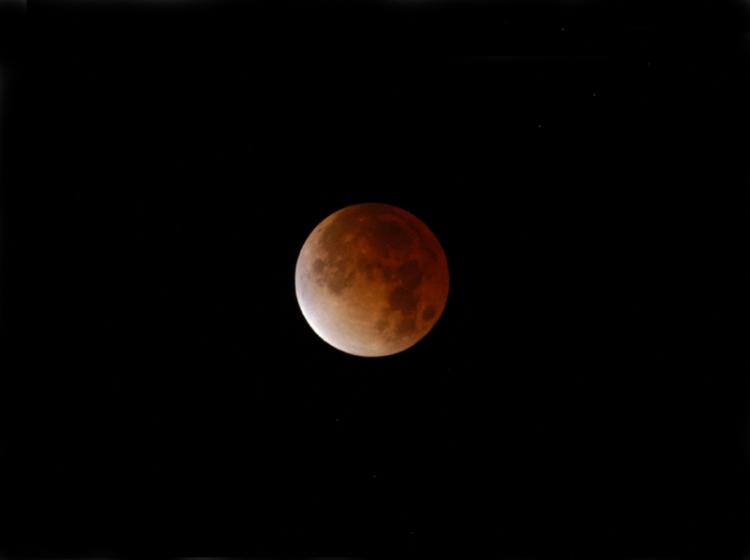
Last night I was in the air during a total lunar eclipse / "super" moon combination. This particular event is called a blood moon. It looked about like this picture from 5500 feet and 3500 feet over the San Francisco Bay Area. It was a beautiful night and a smooth flight with appreciative passengers. Even my hyper critical self had to admit I flew well, especially on the return flight and landing at night. I could hardly ask for more!

Oddly enough, when I saw the moon as I flew I was impressed with the color but I forgot the color was due to the eclipse. I thought, as I flew along, the color was due to smoke or thin clouds obscuring the moon. I was a bit disappointed that we weren't seeing the moon unobscured. It was cool, but not what I was expecting. I thought the eclipse would be more "impressive" for some reason. It wasn't until we were over SJC airport approaching Reid-Hillview to land and a sliver of brilliant, almost blinding,  silver started to peak around the edges of the dull red that I realized what I looking at but not seeing and how special it really was.

It occurs to me now my experience of this moon could be an analogy of my experience of myself, my own flight training. Looking but not seeing and appreciating the beauty of what I'm seeing. Not until it is almost done.

My last flight lesson was the first in a very long time that I didn't leave feeling about 2 inches tall. There's a reason for that. I was not because I was perfect in the air. I was good, but not perfect. It was because I was practicing self critique during that lesson with my CFI's help. Critiquing every maneuver I flew - what worked, what didn't work and what I would do different to further improve. Every critique had to start with what worked first. Every single one. 

In truth it was hard to do. Hard for me to pull my mind away from the result and what could be improved to what was done that worked. It's hard to explain and it will take practice but the emotional result was amazing. I left the lesson feeling good, feeling good about myself, about my progress, about my future. What a wonderful change!

I need to practice seeing the good, seeing what works. It's not easy, especially for me. However, it is a skill I need to develop in order to progress in this journey. It's a skill I need to practice when critiquing my future students. Even the FAA says the #1 duty of the flight instructor is to focus on the positive. If the FAA says so I guess I gotta do it!  *grin*

Wednesday, September 23, 2015

Between the Headsets

Sometimes I don't know what is best for me to write. A message of encouragement, hope, desperation, frustration, discomfort, comfort, abject fear, confidence, wanting to quit, being willing to succeed no matter what it takes? the ups or the downs? All of the above?

I've been through it all in this CFI journey. Do I share it all and expose myself as human and sometimes lacking even though I am training to be an aviation educator? Will future students respect or want to learn from a CFI that had to work so hard? Will they google my name and find this blog and be drawn towards a CFI who understands, intimately, the joys and the frustrations the student pilot will experience? Does it matter? I just don't know. Today I'm in a particularly sharing mood and I'm feeling positive for my aviation future after some extremely difficult recent struggles. So I'll share for now. If I sound whiny or weak or female or whatever, so be it. I am what I am and I can't change without being honest with myself.

Between the Headsets


I asked my CFI when I started this CFI training what he thought my struggles would be. He'd trained me for all of my other certificates and ratings so he would know pretty well what it would be. I don't recall exactly what he said... I believe it was something about knowledge shouldn't be a problem, he didn't know how well I would teach but he could teach that, I'd fly OK. My problem would be "between the headsets".  In other words. The problem wouldn't be something that could be trained, it would be something mental that I'd have to deal with, if I had a problem at all.

I had found training for the Instrument Rating to be relatively easy, in spite of hearing how hard it was. So I hoped, after hearing how hard CFI typically is, I would find CFI relatively easy too. Unfortunately I've run straight into some of my worst mental, emotional challenges in this journey. Learning the knowledge I need was relatively easy. Flying from the right seat was a challenge initially but now I fly just as well from right or left seat. Actually I'm doing some of the best flying I've done in my life. But I have been so close to quitting many times. Frustration at not making the progress I want. Feeling stuck. That's all normal and expected.

Fear Raises its Ugly Head

One thing I didn't expect was to revisit fear. When I started flying I was very afraid. As a matter of fact this blog started the day I realized I was flying and not scared at the same time. I've had to face many fears, turbulence was huge, stalls, I've even had to spin a plane on purpose. But I thought all of those fears were done. I was wrong.

Two weekends ago I went up to demonstrate all of the stalls I have to know how to do as a CFI. I hadn't practiced them since March so I was nervous, rusty and uncomfortable doing them. After that flight my CFI said I seemed to be afraid as I flew and I need to get over those fears. I took that the wrong way. I convinced myself I really was afraid. So the next time I flew and tried to do the stalls again solo, I actually was afraid. Very much so. It was like I was back in my student pilot days, terrified of doing a stall but this time I didn't have a CFI there to yell at me and make me do it. I gave up, flew back to base and was shattered. Was I too afraid to do my job as CFI? How could I do this?

I talked with my siblings, who know me better than anyone and they pointed out how I didn't say I was afraid when I did those demo stalls the first time. So maybe the CFI was wrong and I really was just rusty and uncomfortable. They said I didn't have to be afraid and if I convinced myself I was afraid I would be. So I resolved to myself that I didn't have to be afraid, that I could fly and do what I needed to do. I decided I needed to believe in me, just like the tiny Foxtato in my previous post. I promised myself to make myself do the stalls until I was comfortable. I would do it by myself and I wouldn't need anyone to yell at me to do it.

The next day I drove down to the airport to fly and my usual plane was down for maintenance. So I took out another Arrow I wasn't so familiar with and took it up at dusk and found myself with no issue doing stalls. Normally I wouldn't want to take up a plane I didn't know very well and do stalls, but I just told myself I know how to recover from a stall so it does't matter what the plane does. I would handle it. In the end I had no issue at all. I wasn't afraid anymore, as a matter of fact I was annoyed with the plane because it was positively boring when it stalled. What a difference!

Next flight with my CFI the usual plane was down again, so we went up in the alternate Arrow. He recommended we do unusual attitude recovery because he noticed I tend to get uncomfortable when a plane is in an unusual attitude. We put the plane into all kinds of unusual attitudes... extreme banked turning power on stalls, nose very high and nose very low maneuvers. Lots of g-forces, little g-forces. We did that because high g-forces make me queasy and uncomfortable. I was able to sit and observe the plane, both when I was flying and when he was, without fear. Just observe and take the appropriate action. These maneuvers that would have left me crying 4 years ago.

Next flight I was solo in the usual plane. I did all of the stalls and it was great. No fear, total comfort. I was even happy and excited to find a way to stall a plane in a nose level attitude! I wasn't sure I was doing a couple of the stalls right (accelerated and cross controlled stalls were the particular ones) so I made sure to ask about them for my next flight. I also practiced Lazy 8s with the hope I could demonstrate those and check another item off the CFI training "list".

Frustration Attacks Too

Last flight we went up and I screwed up Lazy 8s in a way I'd never done before. So we spent an hour working on that, by the end of the hour he said I was doing Lazy 8s better than he'd ever seen me do them. But, this is me, I was frustrated that I didn't nail it the first time so I got very down on myself. Then we did the stalls that I wanted to work on, he showed me the tricks to make them really work well and we were done. We went back and debriefed on the flight and I drove home. Depressed and frustrated again. It did occur to me to email my CFI and ask him about what he observed about my comfort level doing the stalls. He was extremely positive about what he saw. My confidence was still low though. I thought I had those Lazy 8s down and I screwed them up. That's what I focused on, not on the progress I made on that maneuver in one hour (the last time I tried to demonstrate them I flailed around for over an hour and he finally told me to focus on easier maneuvers for a while). Even after learning my CFI saw a huge improvement in my comfort level I didn't focus on the positive.

Yep, the problem is between the headsets.

Another of my CFI's CFI candidates, a young man who started training for his CFI some months after I did, is going up for his CFI check ride tomorrow. Even as I type this I feel envious and bad about myself because I started first and will finish last. I shake my head. This guy is about 20 years younger than me, probably grew up dreaming about aviation... he doesn't have to drive an hour each way to get to the airport. He doesn't balance life as a mom and wife and professional with a 50-60 hour a week job (1.5 hour commute each way for that one) and business travel at least once a month. Yet I compare myself to him and find myself wanting. Oh yes, I compare myself with all of the unnamed hundreds or thousands of CFIs out there that must have trained quicker than me and I feel bad.

It's All About Ego

My CFI says this ... Private Pilot is about safety. Instrument is about procedures. Commercial is about finesse. CFI is about ego. Well, I have been feeling like my ego is getting the beating of a lifetime. I've never felt so small as I have going through this training process. The thing is, I am starting to realize, no one is making me feel small but me. No one is saying I suck or I can't do this. No one but me. I've been beating up my own ego to the point of almost giving up. Ignoring all of the good things I've been doing and clinging to all of the problems.

Fact is, I have the knowledge down. I can teach. I can teach and fly at the same time. I am actually good at preparing people for the knowledge portion of their check rides. There are a couple more things I need to check off on the "CFI list" but I am very close to done with that list. I am consistently doing some of the best flying of my life. I have, with a single conscious decision, turned my mental/emotional experience of stalls from at best nervous, at worst fear to total comfort. There are people that are waiting for me to finish my CFI because they want to learn from me. Me!

I'm beginning to think it is time for me to let go of all of the problems and set backs and unmet self expectations. It is time for me to rebuild my own ego the same way I reset my experience of stalls. If I can change that, something that's bothered me for over 700 hours of flying. I can do anything! I just have to let it happen and believe in myself. I can do this just as well or even better than a young man 20 years my junior. I just have to do it and believe in myself instead of beating myself up. Since I'm the one that's been tearing my ego down. I'll just have to build it back up.

If I don't believe in me, no student will.

Sunday, September 6, 2015

I Believe in You

Powerful words. I believe in you. I don't think those words are spoken often enough. The simple expression of the belief that someone can, indeed, do the thing.

This weekend I've had two opportunities to work with (hopefully) future Private Pilots. They both came to me asking for an evaluation of their readiness for the knowledge portion of the Private Pilot practical test. We refer to this portion as the "oral".

Since I am an Advanced Ground Instructor (AGI) I can provide ground instruction for most certificates & ratings. I am particularly interested in teaching the knowledge, planning and judgement skills needed to fly safely because I believe firmly those skills are what will keep a pilot safe and flying a long time. I've also learned from my friendship with a senior CFI and DPE that many candidates for Private Pilot are woefully unprepared for the oral portion of their check rides. It as if the CFIs that trained them are so focused on being flight instructors, getting air time and teaching stick and rudder skills that they forget they need to teach the knowledge, planning and judgement skills too. This weekend I worked with both extremes.

Left to His Own Devices

The first candidate is a future film-maker and current tech worker. He had the typical history of being handed between 5 different flight instructors to date. He likes his current instructor and really wants to do his check ride soon. He was confident that he's ready for the ride but smart enough to take some advice and get a "second opinion" on his readiness to do the oral portion of the check ride. Talking with him on the phone I was impressed with his very positive attitude and self confidence. I was hopeful that he would sail through the mock oral and walk out ready for his ride. I was wrong.

I met with him for 3 hours and did my best DPE imitation. I asked scenario based questions that covered all of the knowledge and special emphasis areas in the Private Pilot PTS. Very similar to the last person I worked with, he was left to his own devices to study and prepare for the test. That did not work well for him. He is not ready for his check ride. We uncovered many areas that he needs to improve before he'll be ready for the ride. There were some areas I couldn't even evaluate because he didn't have the basics done.

After we were done we chatted a bit about how he may proceed from here. I recommended he study specific areas and then we get back together (or he work with his CFI) to help him really understand what he's studying. We also talked about how he was (not) prepared for the orals. He said when he asked questions of his CFIs they'd briefly talk about it and then "$170 later" he was back where he started. He said it seemed none of the CFIs he worked with took any responsibility for the ground learning he had to do. At one point he laughed and said, "It would have been nice to have some fucking warning about how hard this is!"

I emphasized to him that I was impressed with his attitude and I totally believe he can learn what he needs to learn and he can pass his check ride. I asked him to not give up. I believe in you. He left in a good mood with his positive attitude intact in spite of what he described as a humbling experience. We agreed to get back together today but he later asked to postpone so he could study more. I hope he doesn't give up.

More Prepared, Less Confident

The next candidate is someone I know better. I know him to be very studious and conscientious in everything he does. What I didn't know is some of why he's flying. This is his life long dream, a dream that started with the story of his grandfather. His grandfather flew in World War II in China. He and his unit helped rescue American airmen downed in China, Taiwan and Japan. After the war he was imprisoned by the Chinese government in a labor camp for 20 years for helping the Americans. Here was this man's grandson.  I could feel his passion for flying and nervousness about doing this test.

Once again I did my best DPE impression and walked him through scenarios and questions to evaluate his ability to apply what he'd learned in his training. This candidate was very different. He was less confident, more nervous and more prepared. He would not have passed, he was weak in two areas. However, there were some areas that he did extremely well and in most areas he was obviously competent, if nervous. He was prepared by his CFI. His CFI also sat with me to debrief on the weak areas. I know he will do well ultimately.

The thing that ties this candidate to the story is, I told him when he left that I am totally confident he will pass his check ride.  I believe in you. The look of gratitude and relief on his face was just wonderful.

Another Candidate

These two candidates are not unlike me. I, too, am preparing for my own check ride. I'm preparing for my Flight Instructor check ride. I'm more like the second candidate, than the first. I'm conscientious but not so confident. Trying hard with a CFI who is working to prepare me for both the flight and the knowledge portion. Just like them, I have areas I'm weak on. And just like them, sometimes I need to hear I believe in you.

That is one thing my CFI is not good at. He doesn't do much encouraging. I've known him a long time and know he wouldn't spend time training someone on something he doesn't believe they can do, but he doesn't come out and say it. On the other hand, I'm fortunate that I have good friends and family who do believe in me and do tell me so. When I need those precious words I reach out to them and they re-affirm their belief in me. Which helps me believe in myself.

As I continue on my aviation journey and I work with these private pilot candidates I see the power of a couple words of encouragement. I'll make sure to encourage my students. Not to do it too much, but when the time is right, when confidence is low but ability is high, I'll make sure to say I believe in you.

Sunday, August 30, 2015

Cubbin' It


Sweet little J-3 Piper Cub
I had a great flying weekend this weekend. One I desperately needed after a long period of too much work, getting sick, slow recovery leaving me exhausted and major frustration with lack of progress in my flying.

First, Saturday morning I was finally able to make some progress on a flying problem I've been having. My CFI helped, of course, and I was able to end my lesson with a smile on my face and some optimism for the future.

Second, another pilot I know offered me a chance to go fly in his Piper J-3 Cub. It's a perfectly maintained cub from the 1930s and it was FUN FUN FUN! I've never flown in a tail wheel before, not to mention something so simple and pure fun as this plane. We kept the big window open... sometimes opened the door. The air was cool but comfortable and it was sooooo neat to be flying with wind in my hair and to go so slowly. I really did feel like a bird.

Me and the cub's owner.
BIG smiles all around!
We took off and flew slowly to the ridge line near RHV and did some maneuvers, coordination exercises, slow flight and stalls. Then we came back in and did some touch n' gos at RHV. Talk about different. I am not used to coming in to land absolutely unable to see straight ahead. That was a totally different type of landing. We did three and then it was time to come in ... the plumb bob fuel gauge indicated we had about 3 gallons left (we took off with 7 gallons and had an hour of fun on 4 gallons of fuel).

Third, after confirming I would be allowed to sleep myself out Sunday morning, I flew myself up to Willows to meet up with my husband and racing friends for dinner Saturday night. Willows is a special place to me for many reasons. For this trip it was just nice to do a solo cross country flight with nothing to do but fly. I've been having on heck of a month(s) and I needed a break. As requested by my hubby I did a little fly by of the race track to wave at the racers before turning to land at WLW.

Then it happened, I was on final for runway 16 at Willows with a 10-15 knot wind on my nose and I found myself flying a perfect final approach. It's hard to describe but the best way I can describe it is this. Nothing moved. I was looking at the runway and it wasn't moving left or right. The numbers weren't moving up or down. They just got subtly.... slowly....  bigger. It was almost disorienting. I've become so used to gusts, downdrafts and updrafts over the mall by RHV, and changing winds on short final. I've been working on not making unnecessary changes on final but I've not seen this particular view in recent memory. There was nothing for me to do but run through my pre-landing checklist until I was over the fence and ready to round out and land. The landing was good too! What a gift!

Small but mighty cub!
This morning I slept in and went by Nancy's for breakfast and to pick up the obligatory pie. I flew back mid day and the air was actually cool at 5500 feet. As I flew back I practiced observing the small visual and physical queues you can get when flying. I used the tips of my toes for very gentle rudder pressure to make 1 and 2 degree course corrections to fly exactly the course I wanted without using my hands. I monitored the oil temp and pressure gauges, EGT, fuel pressure, switched tanks and thought the engine never runs as smooth as I'd like it. The 1 hour flight went smoothly until I got on the leeward side of Mt. Diablo and the invisible winds kicked me around. That was not unexpected.

I requested the option when I came in to RHV so I could practice more of what I was working on with my CFI. The first touch down was close, so I did a touch and go and went around for another landing. I had to fight to keep the plane aligned with the runway on short final with the erratic winds but still did a good, not great but good touch down. I decided to call it a day. I'll come when conditions are better.

I'm tired as I write this... but it's a happy tired. I've got the "gotta fly" itch again - which is a great sign. I am very grateful to have had the opportunity to fly in the awesome little cub (can't wait to do it again), make progress in my flying and be able to take a break and enjoy flying with some actual skill. I needed that. 

Sunday, July 19, 2015

CFI Training Update

I've made some great progress in the last two weeks... in spite of doing a ton of business travel and some mega work stress. I've finally started to settle in to teaching while I fly. In just two flights I've been able to demonstrate teaching flying in the pattern, normal take offs and landings, commercial steep turns, chandelles and emergency descents. And I swear to you...  I have... recorded... my CFI saying the word "great" about my teaching! More than once! What a nice change from even a month ago.

I won't be able to report much progress for the next two weeks. I'll keep doing the mental preparation that's worked for me to be able to teach however, I won't do any training flights for two weeks. I have business travel, my CFI is on vacation and then I'm on vacation - a desperately needed vacation! I'll be back in August to train.

If the Bonanza is flying again you can expect some posts from me about flying it to St. George, Utah for our vacation week after next - with a stop in Bryce Canyon too! Wish us a safe trip :)

Wednesday, June 17, 2015

Making a Small Fortune

I know it has been a long while since my last post. I've been extremely busy with training, the flying club, work, work travel and family life.  Frankly, when the inspiration to write hits me it's usually been accompanied by a stronger inspiration to sleep! But I thought I would take a moment to share with you, my dear IRs, a brief update on my journey to flight instructor.

As you know, I earned my Advanced Ground Instructor certificate earlier this year. I've actually been putting it to use and providing some ground instruction. I've made almost $300 so far, a very small fortune that's paid for the extra test I had to take in order to get the certificate. I've been able to help someone prepare for the oral portion of their check ride. I could not sign them off for the practical test, I'm not a CFI yet. After I was done the Chief Pilot of the flight school this student pilot attends said I did a great job with that student. I've also spent some time with a prospective commercial pilot discussing the requirements for that certificate, aircraft performance, and managing power when using a constant speed prop.  So far I've found ground instruction quite fun and rewarding.  I've always been strong in aeronautical knowledge and it is nice to be able to share that knowledge and help others be more successful as a result. 

On the "flight" part of flight instruction, my CFI and I spent the majority of the last month or so working through all of the knowledge portions of the CFI practical test. He says he could put me up today and I'd pass the knowledge portion. He even said I talk like I wrote the book for some parts! Now all I have to do is fly.... so that's what we started to work on. I am able to teach and fly at the same time and I've even done some spectacular soft field takeoffs. On the other hand, I've been thinking so hard that my landings fell apart. I put them back together and am starting to rebuild, yet again. 

I could be done with this rating in a month or two or it could be longer. I'm told the first couple maneuvers will take a long time at this stage and then we'll get to the point that we'll be going quicker. At least by this time I know the drill... how to deal with the inevitable frustration as I don't do as good as I think I should right away on some maneuvers. I know how to move forward through that more quickly now too. I'll get there eventually. I'm not putting pressure on myself to get done in a specific time which makes the whole process more pleasant. 

As someone told me when I first started on this CFI journey - How do you eat an elephant? One bite at a time! 

Sunday, April 5, 2015

There is No Try


No. Try not. Do or do not. There is no try. Yoda reminds me of my CFI in this clip. There's no physical resemblance at all... but the wisdom is the same.

One of the most frustrating aspects of training for CFI is re-learning how to fly from the right seat. You must unlearn what you have learned. The minimum hours to get to a commercial certificate is 250 hours. So even for the fastest learner, you learn to be CFI after spending 250 hours in the left seat. In those hours you hone your skills to the level of reflex to get the results you want out of the plane.

Switch to the right seat where the hands are wrong, the view is wrong, the instruments don't read the same, etc. Its like going from being a right handed writer all your life and being made to write with you left hand. The brain has to get involved again and you have to think about those same things that were subconscious before, the muscle movements, direction the pen should go, etc. etc. Eventually you get used to being in the right seat and the mind gets to back off and subconscious can take over again.

Just when that gets comfortable, you have to "demonstrate and simultaneously explain a [insert maneuver here] from an instructional standpoint". While your at it, the demonstration needs to be done to commercial pilot specifications. Or, if you make a mistake, you must be able to explain (while you correct it) what the mistake was, why it happened and what to do to correct for it. If you want to see what this is like, try describing, out loud, in great detail, before you do it, every step of driving a stick shift car up and down a mountain road and why you do everything you do. And, every once in a while the strangeness of being in the right seat bites you as your brain gets overwhelmed handling all of the talking and explaining and demonstrating and then you start thinking even harder about the basic flying and it all falls apart.

I've added power when I should have reduced it, trimmed up when it was supposed to be down, put in left aileron when it should be right and right when it should be left. Demonstrating cross controlled stalls really confuses things since I need to actually deliberately cross control in a descending turn which is SOOO against what I've trained to do that I had to think twice as hard to do the cross controlled stall which then flowed over onto doing sideslips on short final wrong. And... I've had to go through a two to three month plateau to get to where I am today!!

So what? What does this have to do with Yoda's quote? you ask. Good question.

What I've found recently is when I don't try and I just do, I'm able to do very well. Do or do not. There is no try. It's come up many times over the last few months as I've started to break out of the plateau. At the end of a long solo practice flight where I came in to land high and, when I realized it, without thought, I effortlessly lost the extra altitude quickly and under control and landed the plane lightly on the mains. A situation that would have forced a go-around a year ago. When I "tried" to do power off 180s in perfect conditions and got nothing but frustration while I was able to do excellent power off 180s in gusty and erratic winds, various starting altitudes and very imperfect conditions. I didn't try, I just did what I had to do to make it work. "Trying" to land on the centerline in gusty cross winds and getting myself all confused about ailerons and rudders and how to do a side slip. When I finally gave up on trying and thinking about how and just told myself, hell or high water, get and keep, my ass on that centerline I was able to do so effortlessly.

I'm wondering if the trick to successfully "demonstrating and simultaneously explaining from an instructional standpoint" is separating the explaining from the demonstrating. Does the demonstrating have to be at the reflex level and the explaining happen separately from the demonstrating? That may be it. According to my CFI's definition of teaching in the air... teaching is when you explain before you do/it happens. Narrating is saying as you do and reporting is saying after you do. So if teaching is saying before doing... the doing has to be separate from the saying. And if I can think less about the doing and yet do it well, that leaves me more bandwidth for teaching.

Try not. Do or do not. There is no try. 

I will do less trying and more doing and see how that goes.

Spin Video


Some shots from three particularly good spins from my last spin training session. You can see how spinning a plane results in views that are entirely not normal for humans. We were working on making the spins last as long as possible. My CFI (the guy on the left) did the first and the last one in this sequence, I did the middle one.


Enjoy!

Wednesday, March 25, 2015

Spin Part II

That's an unusual attitude!
When it stopped being terrifying, it became fun. When I did it the second time it became something I could control and explore. And the feeling I'm left with is exhilaration that I just can't express. It's something akin to my first landings, or when I learned I could control a plane over the runway, or when Lazy 8s became my favorite maneuver, but more. So much more.


It is, of course, spins. Stalling an airplane, making it spin and then playing with the spin to see what it takes to make the plane spin longer. Playing with a spin. PLAYING with a SPIN. Do you hear me? ME!? Playing with a spin! I have been stumped since yesterday trying to express how huge that is for me.

Yeah... that's me, smiling!
I am still stumped. I've written probably four pages of words... and none of them work. Maybe I do need to make that video... a compilation of "Horror at 5000 feet" which is what my CFI jokingly entitled the video of my first spin and the last spin I did yesterday where I was smiling through the whole thing and was loving it. I call it "Horror at 5000 feet part II." Or "Horror at 5000 feet, the Revenge". Yeah. I think that's what I'll do. Words fail me. In the meantime, some photos grabbed from screen shots. Video to come.

The other bits of news I'd like to share with you all... I've got my "Spin Endorsement" which means I have been found instructionally proficient in spins. Another milestone in my CFI training completed. Even better, I have a deal with my CFI to keep going up and doing spins every month or so, in part for fun and in part so I'd feel comfortable taking a student up for a spin myself. I'm really looking forward to that.

A new endorsement in my logbook. 

Sunday, March 15, 2015

Spin!

I grab at the shoulder harness and gasp out loud, Oh my God! I can't do this! The green Northern California hills wobbles below me an instant after seeing blue sky. Power idle, says his calm voice. The wobbling motion of the world becomes a smoother spin as the plane stabilized. Rudder, he says. The spin stops instantly and he pulls smoothly out of the dive. See, we only lost 500 feet. 


I regarded the plane I'd use for my spin training with
some trepidation when I arrived at the airport.
The first spin of my required spin training yesterday and I panicked. The word can't crossed my lips. I just did not know how I could do it. How can I spin a plane on purpose? But, I have to do this. If I'm going to be a CFI I have to be able to spin a plane and, more important, recover from spins safely. I hated it but I'd have to keep at this if I want to meet my goal. I asked him to do another one.

Climb back to up 5000 feet, full power and pitching up to the edge of a stall, then right before the stall, stomp left rudder and the nose yaws up and left. In a blink the world wobbles, then spins and recovers again. His calm voice guiding every step of the way. That time the initial wobble was less scary. Again.

Again and again and again. Five times he repeated the process, varying the characteristics of the spin by changing when he reduced power and how quickly he recovered. Each time I was able to think, instead of panic, through more of the process. Each time it became less terrifying and more familiar, not comfortable, but at least familiar.

My turn. I ask him to make sure I don't mess this up. He reassures me with a quick grin.  Power on stall, stomp rudder, yaw and roll, wobble and spin and very quick recovery. It was much less scary when I did it. I did it again and again, another three times before my stomach started to protest the G forces as I recovered from the dive at the end of the spin. I was starting to enjoy it. It was sorta fun! We decided to return to the airport before my stomach got any worse. We would go up to do spins to the right the next time we meet.

On the flight back to the airport I felt elated. I did it! I actually did it! I pushed through the panic and did it. If I can do that, I can do anything!

On the long drive home I thought about the spin and what I wanted to do next time I spin. Next time I want to let it spin longer and smooth out my recovery (in addition to spinning to the right and seeing what happens when you pull back on the elevator during a spin). I actually wanted more. I actually felt like I could control this scary thing, this spin, and decide to let it go on longer or decide to get out quicker.

I got home and basked in a strong feeling of relief and freedom and gratitude. Relief that I was able to push through the panic. That I would be able to go forward with the process and become a CFI.  Freedom, I wasn't sure why, but I definitely felt freer. Like there was something that was blocking me from the fullness of flying and I was free of that thing. Gratitude, honest gratitude, for and to my flight instructor who helped get me through it. The same flight instructor I've worked with for all of my certificates and ratings. This wasn't the first time I did a spin with a flight instructor in the plane, but it was the first time I was willing to do it a second time.

Elation, relief, freedom, gratitude... not what I expected as a result of spin training, but I will quite happily take it.

Saturday, March 7, 2015

Great Day!

Saturday... beginning of March. Absolutely gorgeous flying weather... and, on top of that, I had a fantastic day... aviation related of course!

Day started off sleeping in all the way to 8AM. Then I got up and made myself a nice breakfast. Left the house by 10AM and got to the airport at 11. Talked to friends at the club, helped a club member with a computer problem and met with a future member who wants to get an instrument rating. I recommended some flight instructors to him.

The 6 members who signed up for the RHV tower tour arrived.  We loaded up two cars and drove over to RHV's tower and spent almost two hours there learning about tower operations at our home airport.

Back to the club and went to a nearby fast food joint to grab lunch with a CFI friend. Back to the club and pre-flit the plane for my flight lesson. I had been rehearsing in my mind over and over exactly how I would do this flight and I expected it to go well.

Took off for the lesson and did great, great, great! I was teaching, flying and talking and I did awesome. My CFI said that a couple times and even patted me on the back he was so pleased. He said whatever I had for breakfast I should do that again. Then on approach to land my CFI says lets see if you can land on the centerline. So I put the plane exactly on the centerline, light on the mains and on the numbers. Taxied off at Charlie. He said, "You know the hard part, do that again." I know, but I smiled anyway.  As we taxied back to the club he was very positive. So was I. I actually said out loud, "I CAN do this." He said he knew that.  Next time we meet we'll do chandelles and lazy 8s. After that will be my spin training!

Lastly we did a brief meeting with the TSA and some of the club CFIs. I learned a lot and we all had a great laugh too.

At the airport from 11 to 7 and it felt like 5 minutes... 5 very good minutes. Tomorrow I will go up solo and practice teaching chandelles and lazy 8s. Tomorrow promises to be great day too.

Thursday, February 12, 2015

Advanced Ground Instructor


Keep your friends close and the FAA closer. 
I visited my local FSDO (that's Flight Standards District Office - or you can think of it as the local branch of the FAA) today. I had an appointment at 8:00 AM and all I had to bring with me was my pilot certificate and the original test reports from two written FAA tests, the Fundamentals of Instruction (FOI) and Advanced Ground Instructor (AGI). In order to earn an AGI you have to pass these two written tests with a 70% or more. I earned 96% on the FOI and 97% on the AGI. Definitely qualified according to the FAA. 20 minutes later I walked out the door with a temporary airman certificate for GROUND INSTRUCTOR with an ADVANCED rating.

The FAA has blurry printers too.
In a month or so I'll get a hard card similar to my commercial pilot certificate as my permanent Advanced Ground Instructor certificate. In the meantime I have a paper certificate that will allow me to provide ground training for all certificates and ratings issued under Part 61 in the Federal Aviation Regulations with the exception of ground training related to instrument flying.

Am I going to start teaching ground classes? I'm not planning on it right now. At least not a wholesale private pilot ground school. For a couple reasons: 1) my lesson plans are designed around the idea of a flight immediately re-enforcing what was learned during the ground lesson and, 2) I'm really busy learning how to be a CFI! But this does give me the opportunity to legally charge for the knowledge I've earned over the years and demonstrated by passing those tests. So I will keep my eyes open for opportunities.

It is sorta funny though, when I went to pick up the certificate I was thinking of it as just a formality. But now that I have it, I'm pretty darned proud of what I've accomplished. Yes, there are young men and women who go from no flying to AGI and CFI in 250 hours and its taken me over 4 years and 600 hours of flying and I don't know how many hours of studying to get where I am today, but, I've accomplished a lot and it is great to have another certificate that validates my efforts to date. Not to mention, I want to be a Gold Seal CFI when I get enough experience and to do that you have to have an AGI or IGI certificate!

Wednesday, February 11, 2015

Bounce Back

"I've failed over and over and over again in my life and that is why I succeed." - Michael Jordan

Funny how messages show up in your life when you need them most. This quote was on my phone when I woke up yesterday morning. Which was good, because I was feeling like a failure and expecting to fail again. I was planning on doing the flight my CFI recommended that evening and not sure what result I would get. The only thing I was sure about was, if I sucked as bad as I had previously I would be taking a couple weeks off. The ego could only take so many blows before it had to have a break and my flying ego was pretty battered. 

Before I went out to the airport I heard great news from my husband and bad news about my daughter. My emotions seemed to cancel themselves out when I went out preflight the plane. I went through the process of inspecting and preparing the plane for the flight. It was getting late so I made sure the lights were working too. Preflight always soothes me and focuses my mind on the task at hand. Checklists help with that too. Going through those familiar steps, making sure each is done, helps me center at the worst of times. And, while I wasn't feeling my most confident, I recalled this was far from the worst of times. 

I got some help pushing the heavy plane uphill out of it's parking spot and settled in to the right seat. As I taxied by the "instructors bench", a place where there used to be a bench that flight instructors would sit on as they watched their students on their first solo, I recognized one of the CFIs sitting there. I waved and he waved back. It reminded me of a day, before I got my private certificate, that I was doing pattern work solo and my CFI was in this same plane instructing the CFI sitting at the bench for HIS initial CFI. I smiled. 

I requested a downwind departure and headed for South County airport. I figured if I was going to practice takeoffs and landings I didn't want anyone to see it if it went poorly. I didn't know what to expect on this flight, so I planned to just fly the first pattern as normal and see what happened. I was distracted on the downwind looking for traffic that was in the pattern and forgot to put down the gear until I was abeam the numbers. That threw me off a bit but I came in for a good landing, on the centerline. Which was something I'd been struggling with since I moved to the right seat. 

My next time around also resulted in a nice landing - on the centerline and on the numbers. I noticed I needed to add power on short final as I usually did so I decided I'd see what I needed to do to fix that next time around. I decided to talk through my next pattern and see if I could talk and land at the same time. I did that and on the next pattern I decided instead of reducing power to get on glide slope, I'd be OK with being above glide slope as long as my aim point wasn't moving up or down on the windscreen. I talked about that to myself and found I only had to add a tiny bit of power. 

Next time around I did even more talking, explaining some of the process in addition to the procedure. I was especially careful on final and used my aim point as the primary measure of my glide slope. As I talked and explained to myself why I was doing that I had a very nice stabilized approach all the way down to land on the numbers, didn't have to add any power at all. On the take offs I was more ruthless with myself about the moment of rotation, making sure I didn't rotate until the plane was ready to take off and ensuring I stayed right over the centerline the whole time. Each landing improved over the previous one. I started working on really fine tuning my approaches and being REALLY on the centerline for all of final. 

I did 6 takeoffs and landings at South County and decided to head back to Reid Hillview. It was getting darker and my landings and pattern were almost perfect as far as I could tell. If not perfect, 200% better than the prior two months. When I came into RHV on the straight in approach I used the same procedure to manage my glide slope and landed a very nice commercial grade crosswind landing back at the home airport. 

I was very pleased. I still am. Maybe I am bouncing out of the plateau? Who knows... but that was a major improvement over my previous flights by far. So I'm not canceling my next lesson and I'll find out if I can duplicate the result with my CFI in the plane. At least now I have hope that I can. 

Thanks, Michael Jordan, for explaining how one of the keys to success is failure!